Relax first
Muscles around an uncomfortable area are often persistently tight. The first step is to help the body release its guarding, rather than applying force.
Approach
Relax first, then stretch, add focused adjustments where needed, and follow with wellness exercises to help reduce recurrence.
Philosophy
Combining the strengths of different techniques, we tailor the session to each case, aiming for an effective approach within the available time.
Muscles around an uncomfortable area are often persistently tight. The first step is to help the body release its guarding, rather than applying force.
Stretching after the muscles have relaxed can make joint movement feel smoother. The range stays within what you can tolerate comfortably.
Once the tightest or most uncomfortable area is understood, we focus on it rather than concentrating on one point from the outset.
Take away suitable wellness exercises to maintain comfort and help reduce recurrence in daily life.
After personally working with over 8,000 people, Master Tom has found that tension in the same area can reflect very different lifestyles. Desk-related neck pain, lower-back discomfort from standing and shoulder tightness after sport call for different combinations and sequences. Each session therefore begins with a consultation. To learn how Master Tom went from client to practitioner, seeBackground and philosophy。
People searching for pain treatment sometimes group massage, chiropractic care and physiotherapy together. Diagnosis, imaging, medication and rehabilitation plans belong to registered doctors and the relevant registered healthcare professionals. Here, hands-on pain relief focuses on relaxation, acupressure massage, tendon stretching and wellness exercises for comfort and maintenance. It does not involve diagnosis or replace medical care. For each approach's role, see the homepagecomparison of pain care options。
Four elements
Three hands-on approaches and a tailored exercise routine. Select the four tabs below to learn more.
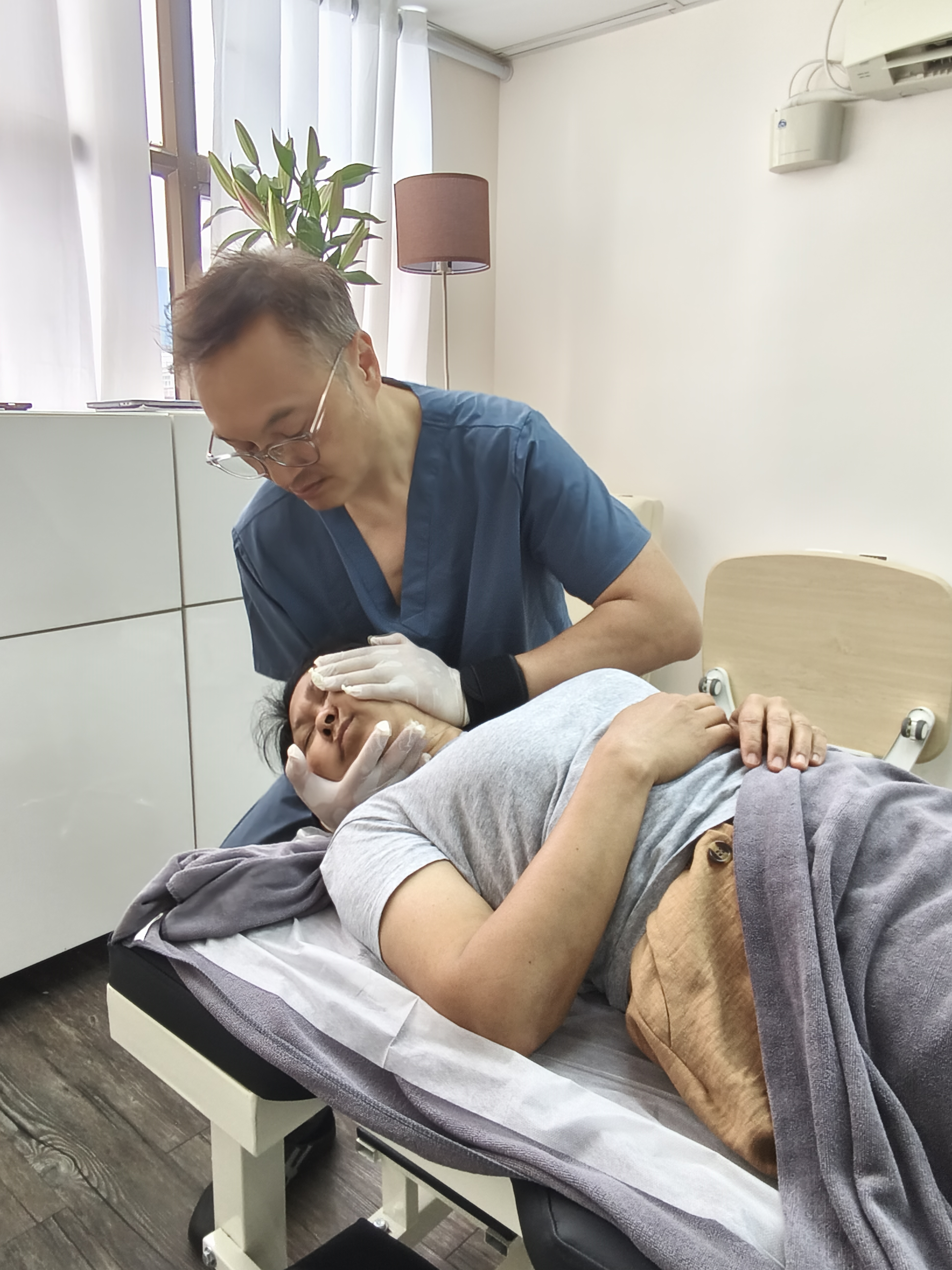
The hands sense current tension and relaxation, using a direct rhythm to help muscles release their guarding. Pressure follows your feedback, not a fixed routine.
Master Tom learned this rhythm and pressure from experienced practitioners. It is the starting point of his approach, used mainly during muscle relaxation to prepare for stretching and focused work.
Massage informed by acupressure concepts helps relax common areas of tension such as the neck, shoulders and lower back. This is supportive care, not medical diagnosis.
Tuina is a traditional Chinese manual technique using pressing, kneading, pushing and grasping movements. Master Tom explains the area being worked on in plain language and adapts the pressure to each person. Some sessions begin with whole-body acupressure massage before focusing on the main concern, such asthe case of persistent elbow discomfort。
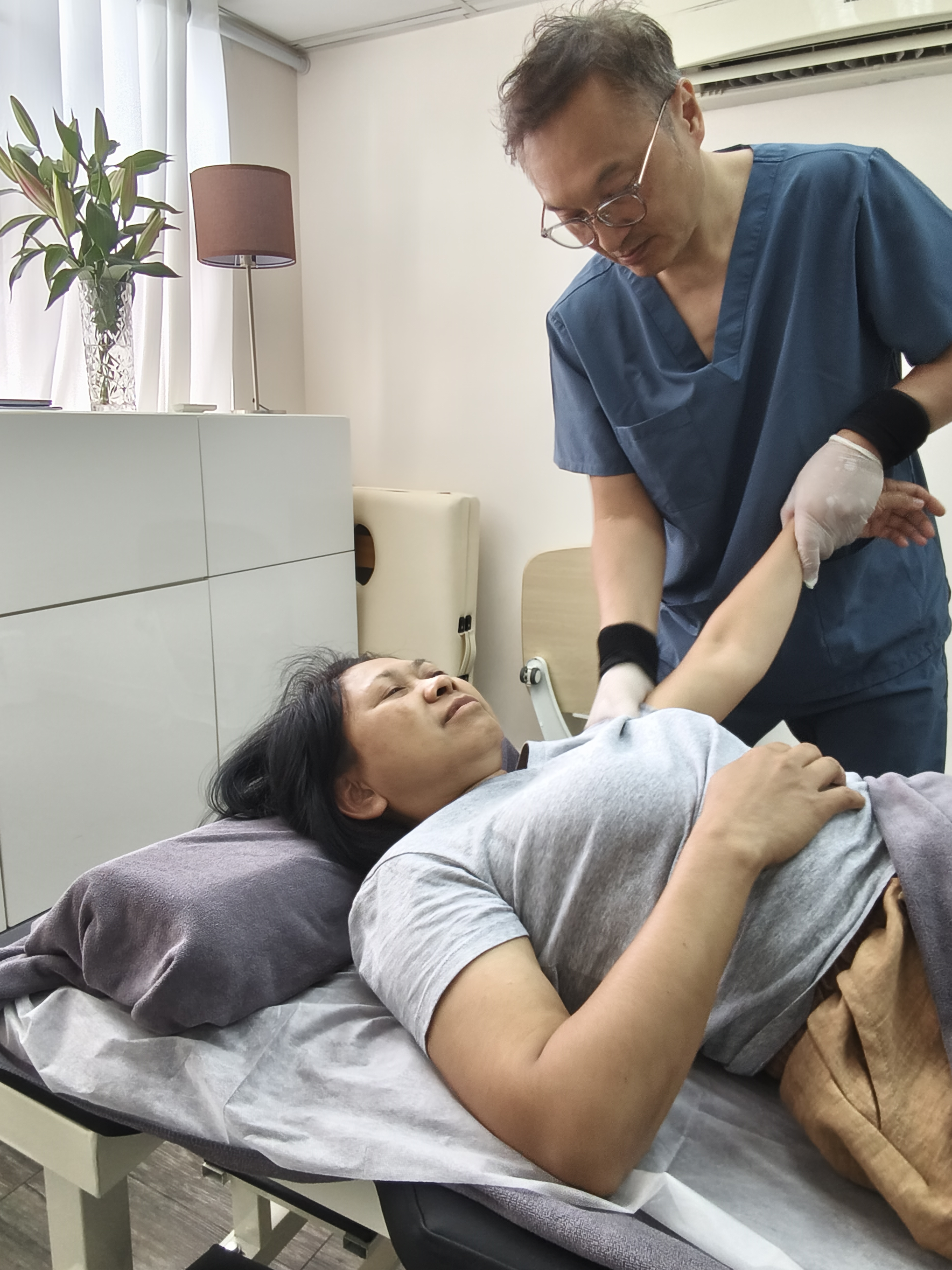
Stretching follows muscle relaxation to make joint movement feel smoother. The range is always guided by what you can comfortably tolerate at that moment.
Master Tom guides the stretch while you relax and follow. Speak up whenever the range feels too large. It is often used for restricted-feeling movement around the lower back or shoulders, such asseated lower-back stretching。
One routine does not suit everyone. Movements are chosen for your work, sports and current areas of tension to help maintain comfort and reduce recurrence.
Wellness movements are slower and smaller, aiming to give tight areas room rather than make you sweat. Regular practice is needed to support maintenance. For demonstrations, visit theWellness section; for the thinking behind them, readWhy your wellness exercises change from session to sessionandExercise versus wellness movements。
Why this order
A suitable sequence can feel easier for the body and make movement feel smoother.
When an area is tight, the body naturally guards it. We therefore start with a gentler rhythm to help the muscles relax before moving on.
When muscles are more relaxed, joint movement can feel smoother, and the stretch can be adjusted gradually within your comfortable range.
After general relaxation, the tightest areas become clearer. Focused work can then be applied with pressure adjusted to your feedback.
Returning to familiar sitting and working habits may bring tension back. Wellness exercises help you take an active role in maintaining comfort.
A session
Five steps, from the initial conversation to taking home your exercises.
We discuss where you feel tight, how you sit and move, and your work, exercise and sleep. Please tell us about surgery, injuries or persistent discomfort.
Help the body release its guarding, with pressure adjusted to your feedback.
Combine massage, stretching and focused adjustments as needed for the main area of discomfort.
Demonstrate and adapt everyday movements for you to take home.
Explain how to maintain comfort through daily posture and movement habits.
It depends on the consultation, areas addressed and exercise guidance. We will agree a time slot when booking. Please enquire on WhatsApp first.
By area
Different areas have commonly used techniques. Follow these links to photos and related cases. The actual approach varies by individual.
Hands-on care for neck discomfort, commonly seen in people who spend long hours at computers or looking down.
Hands-on care for shoulder and arm discomfort, including aching around the shoulder blades and tension after sport.
Related:Shoulder technique photos・A badminton-related shoulder case
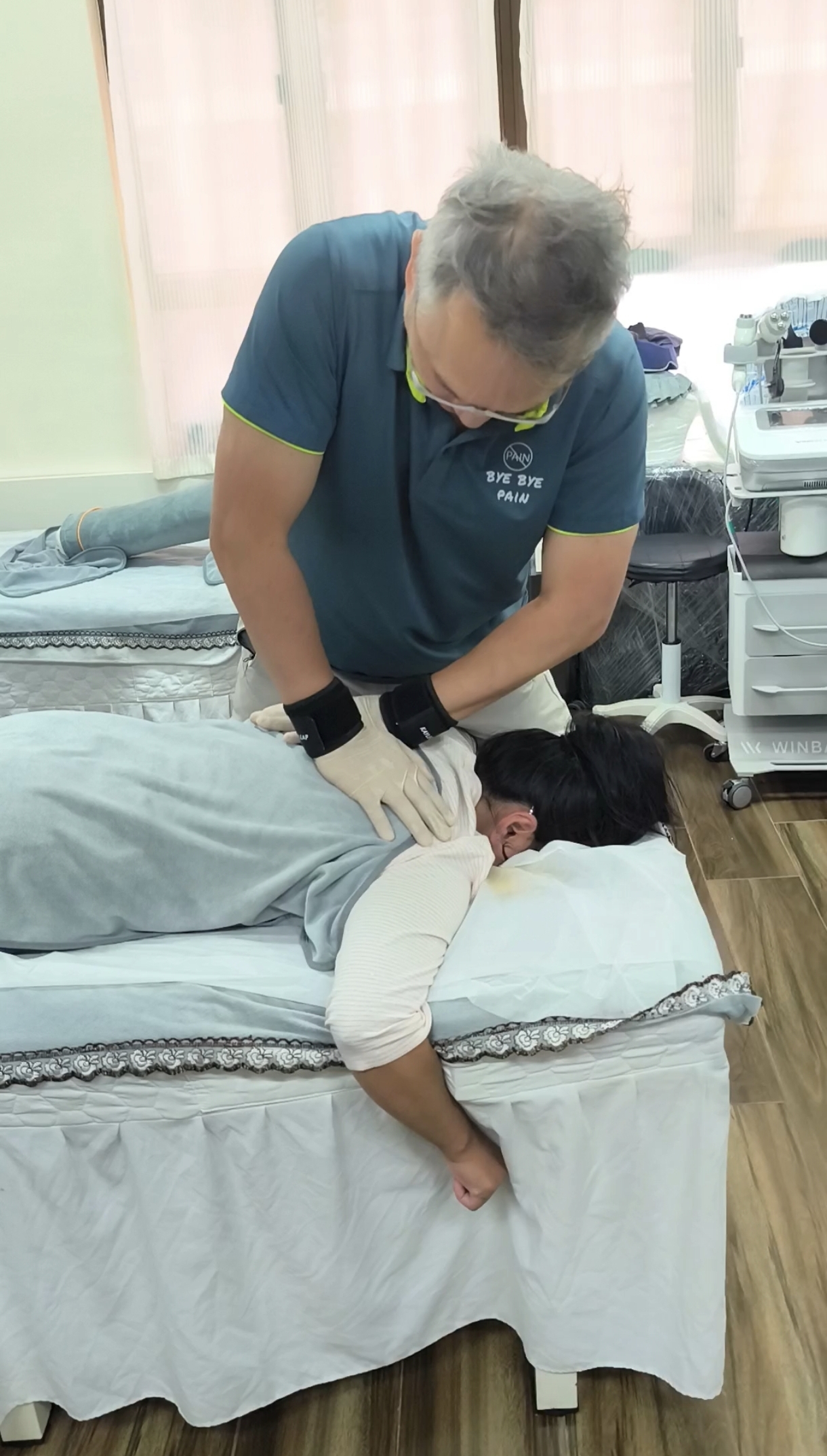
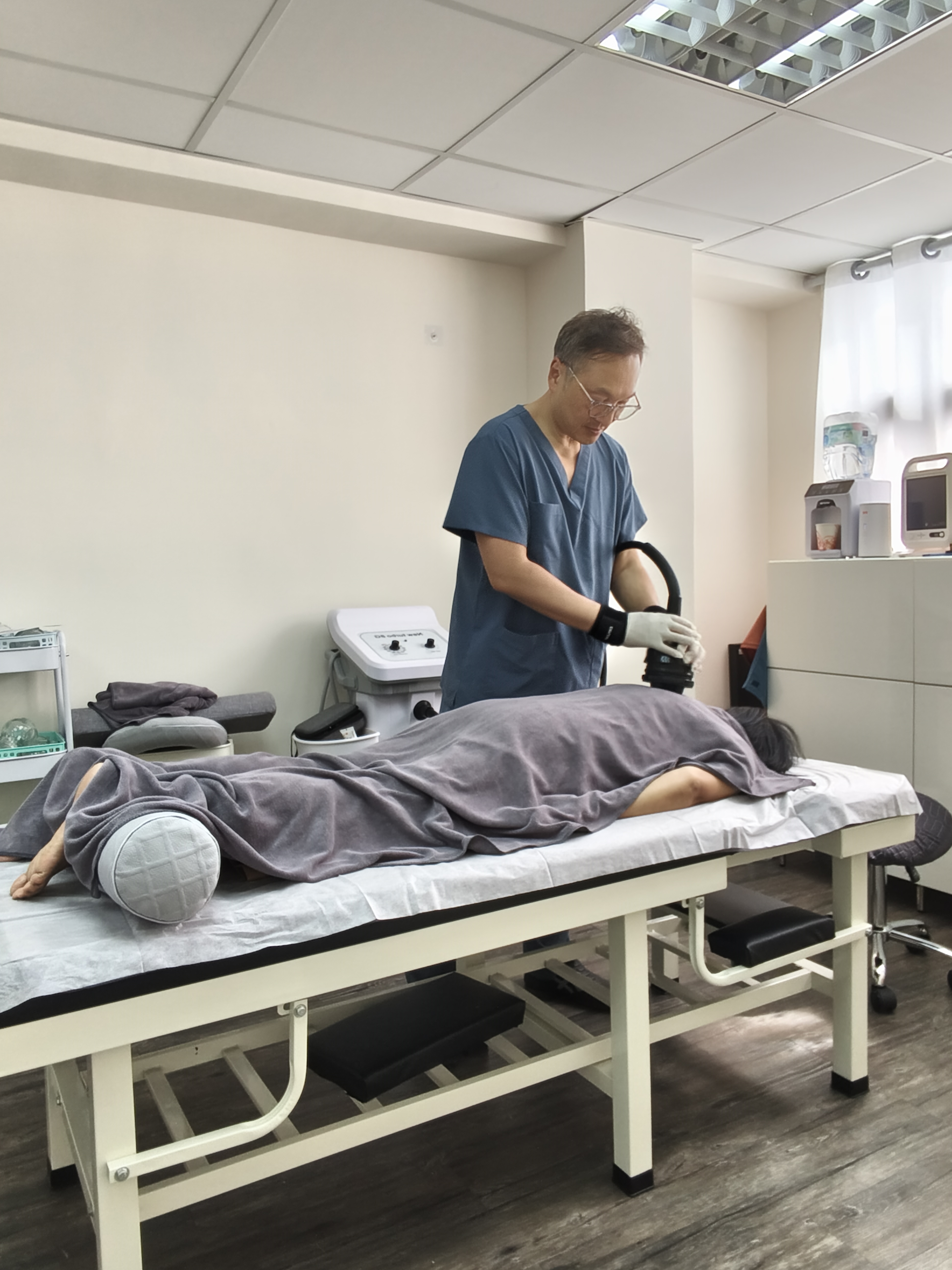
Hands-on care for back discomfort, such as massage while lying face down.
Related:Back technique photos・A case of persistent shoulder and back pain
Hands-on care for waist and lower-back discomfort, including lower-back relaxation and seated stretching.
Related:Lower-back technique photos・A prolonged-standing case
Hands-on care for knee discomfort, often experienced by people doing long hours of physical work.
Related:Knee technique photos・A renovation worker's knee case
Hands-on care for foot and ankle discomfort.
Related:Ankle technique photos
In practice
These real stories from the client page illustrate how sessions are tailored. They describe individual experiences; results vary.
Mr Lee had elbow pain for almost a year. The session began with whole-body acupressure massage, focusing on the waist and back before addressing the elbow.
Badminton enthusiast Ah Ming had shoulder pain. After discussing his situation, the case was considered related to muscle strain and hands-on care followed.
Teacher Ms Chan had discomfort in several areas that affected sleep. Her sleep and working conditions were discussed before hands-on care.
Office worker Mr Lo returned after several days for shoulder-blade discomfort. Mr Lee, with persistent shoulder and back pain, returned a week later.
Actor Mr Deno Cheung's long working hours had contributed to strain in several areas. A gradual programme of hands-on sessions was arranged for him.
Services
One approach, offered through six services with different comfort goals.
Consultation, whole-body relaxation, combined techniques and exercise advice. For persistent tension or general relaxation.
Identify the tightest area, relax first, then focus on it. For particular discomfort in the neck, shoulders, lower back or joints.
Slower-paced relaxation and stretching with gentler pressure, focused on maintenance.
Slower head and neck techniques for clients who prefer a quieter way to relax.
Discuss your daily habits, then demonstrate and adapt movements suited to you.
Discuss common urban discomforts, watch a demonstration, practise and take the movements home.Self-care class details
If uncertain, consult a registered doctor before booking. Seek medical advice first for persistent, suddenly worsening or unexplained pain.
Continue the exercises demonstrated by Master Tom and be mindful of sitting and movement habits. For reminders about clothing, health information, hydration and activity, readWhat should I know before and after a hands-on session?; desk workers may also find this useful:Three everyday ways to relax a tight neck and shoulders。
FAQ
It combines the strengths of Malaysian techniques, Chinese acupressure massage and tendon stretching in a tailored sequence: relax, stretch, apply focused work, then use wellness exercises to help reduce recurrence.
I am a pain relief practitioner. I combine hands-on relaxation and stretching with wellness exercise guidance. I do not diagnose conditions or replace a chiropractor, physiotherapist or doctor. For imaging, rehabilitation plans or medication advice, consult the relevant registered professional.
Pressure is adjusted to your feedback. Some areas may feel achy or under pressure, but pain should not be intolerable. Speak up at any time and I will adjust immediately.
Usually. Exercises after the session help maintain comfort and reduce recurrence. They are adapted to your current condition, so they may differ between visits.
It varies. Some clients return after several days or a week, while others return the next day. We will discuss follow-up according to your current needs.
Today's tension may differ from your last visit, and work and lifestyle habits change too. Each visit begins with a consultation before techniques are selected.
Tell us on WhatsApp where you feel tight or uncomfortable. We are at 54 Hillwood Road, Tsim Sha Tsui. Visits are by appointment.
Master Tom is a pain relief practitioner, not a chiropractor, physiotherapist or doctor. This website does not provide medical advice, diagnosis or treatment. Consult a registered doctor about medical concerns.Full disclaimer
網頁設計 由 EC Shop City 提供